Biography
The Nabis were a tightly knit band of fin-de-siècle Parisian painters, active during the years of 1888 to 1900. Part of the wider Symbolist movement, and working at the dawn of Freud’s theories on the subconscious, they sought to carry Impressionism beyond perception and into the realm of pure sensation.
Colour was chosen for emotional weight rather than optical truth; particular hues conjured feeling within a single figure or transfigured an ordinary scene into something charged with inner life. Pattern and ornament were celebrated equally, with intimate interiors and sun-dappled gardens resolved into compositions of flattened pictorial space and a light, luminous touch. The result was an art of quiet revelation – one that found poetry in the everyday and profound humanity in the domestic.
The seven principal Nabis included Pierre Bonnard (1867–1947), Maurice Denis (1870–1943), Paul Ranson (1864–1909), Ker-Xavier Roussel (1867–1944), Paul Sérusier (1864–1927), Félix Vallotton (1865–1925) and Édouard Vuillard (1868–1940). Yet the circle extended further than art history has typically acknowledged — a broader, more collaborative brotherhood whose full reach is still being mapped.
The Nabi legacy is very much alive. With a decisive contemporary turn toward figurative painting in the last 10 years, the Nabis have undergone a significant reappraisal. Artists including Mamma Andersson, Ian Davenport, Peter Doig, David Hockney, Pierre Knop and Anne Rothenstein have each cited their influence, while a recent wave of scholarship has confirmed what their paintings always suggested: that their modernity runs far deeper than their celebrated contribution to art.
Read more
-
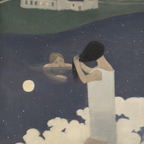
 Félix VallottonBaigneuses au clair de lune, 1893Oil on canvas10 5/8 x 8 1/2 in / 27 x 21.6 cm%3Cdiv%20class%3D%22artist%22%3E%3Cspan%20class%3D%22artist%22%3E%3Cstrong%3EF%C3%A9lix%20Vallotton%3C%2Fstrong%3E%3C%2Fspan%3E%3C%2Fdiv%3E%0D%3Cdiv%20class%3D%22title%22%3E%3Cem%3EBaigneuses%20au%20clair%20de%20lune%3C%2Fem%3E%2C%201893%3C%2Fdiv%3E%0D%3Cdiv%20class%3D%22medium%22%3EOil%20on%20canvas%3C%2Fdiv%3E%0D%3Cdiv%20class%3D%22dimensions%22%3E10%205%2F8%20x%208%201%2F2%20in%20%2F%2027%20x%2021.6%20cm%3C%2Fdiv%3E
 -
 Edouard VuillardMarie au jardin, 1893oil on canvas
10 5/8 x 13 3/4 in
27 x 35 cm%3Cdiv%20class%3D%22artist%22%3E%3Cspan%20class%3D%22artist%22%3E%3Cstrong%3EEdouard%20Vuillard%3C/strong%3E%3C/span%3E%3C/div%3E%0D%3Cdiv%20class%3D%22title%22%3E%3Cem%3EMarie%20au%20jardin%3C/em%3E%2C%201893%3C/div%3E%0D%3Cdiv%20class%3D%22medium%22%3Eoil%20on%20canvas%3Cbr%20/%3E%0A%3C/div%3E%0D%3Cdiv%20class%3D%22dimensions%22%3E10%205/8%20x%2013%203/4%20in%3Cbr%20/%3E%0A27%20x%2035%20cm%3C/div%3E -
 Jozsef Rippl-RonaiMother and Child, 1891pastel on cardboard15 3/4 x 12 1/4 in
40 x 31 cm -
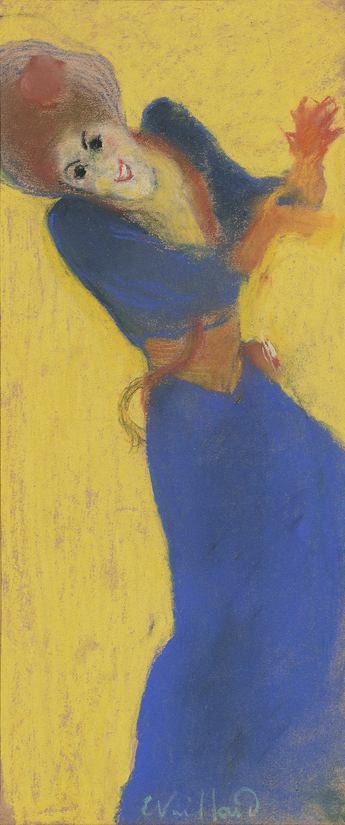 Edouard VuillardDiana Duhamel in Miss Helyett, 1891pastel on paper16 1/8 x 7 3/8 in
41 x 18.5 cm%3Cdiv%20class%3D%22artist%22%3E%3Cspan%20class%3D%22artist%22%3E%3Cstrong%3EEdouard%20Vuillard%3C/strong%3E%3C/span%3E%3C/div%3E%0D%3Cdiv%20class%3D%22title%22%3E%3Cem%3EDiana%20Duhamel%20in%20Miss%20Helyett%3C/em%3E%2C%201891%3C/div%3E%0D%3Cdiv%20class%3D%22medium%22%3Epastel%20on%20paper%3C/div%3E%0D%3Cdiv%20class%3D%22dimensions%22%3E16%201/8%20x%207%203/8%20in%3Cbr%20/%3E%0A41%20x%2018.5%20cm%3C/div%3E -
 Pierre BonnardLa famille du compositeur Claude Terrasse, 1892watercolour on paper11 1/2 x 21 1/4 in
29 x 54 cm
Latest

News

Frieze Masters Tickets for Students
Exhibitions and Art Fairs

The Nabi Shock

The Nabi Shock

MAZE Art St. Moritz

MAZE Art Gstaad
Frieze Masters 2025

Treasure House 2025

TEFAF New York 2025

Art Basel Miami Beach 2024

Les Nabis, 1888–1900
The Artistic Brotherhood of Les Nabis, 1888–1900
Frieze Masters 9–13 October 2024